
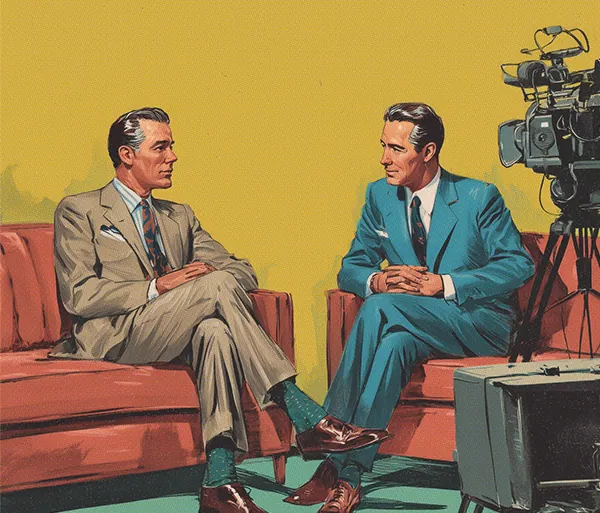
If there's something defining of the era of AI, it is this: we have completely replaced the process with the outcome. And we have let go of all the questions that arise during the process of creating something. The Idles intends to do precisely the opposite; instead of giving black-and-white, clear-cut answers, it asks a lot of questions.
Readers Beware: This may turn out to be a relatively brainy long read. If you would rather digest information in a 299-character format, I wouldn’t recommend putting yourself through this.
Monday Morning Apocalypse
You walk into your office, just like every Monday. Something is off; there’s a bunch of people crowded around a note on the wall. Apparently, some company called Moloch Industries has replaced the management with a supercomputer called Maxwell. You are to receive instructions promptly from a series of pneumatic tubes installed across the office. Have we become agents subordinated to a machine?
Some of you are going to receive instructions to act as supervisors. Your goal: to report those deemed unproductive. What is productivity, anyway? Is it an arbitrary metric we made up? What is always like this? You are to uphold productivity not only in your workplace, but the scrutiny will follow you into your personal life.
More importantly, if you are not deemed productive, you’ll be branded as an "idle." There’s a vague threat regarding what happens to idles. What happens to one if he decides not to comply with the mandate of productivity? Is it enforced by soft or hard power?
More importantly, what is Maxwell? Does it even exist? Is it a machine in the first place, or your boss writing notes from a backroom? Some questions will be left unanswered, I’m afraid.
AI Art
If there was any doubt in my mind that this project had to be done using GenAI art, it was brief. It had very little to do with a business decision and more with an artistic one.
There’s decidedly a politically performative element to the choice of GenAI art in this project—a provocation. The risk of going with human art was clear: being labeled as the "cool guys" in the playground and getting accolades from all those subscribing to simple discourses with regards to AI. It’s a safe enough choice; it’s easy to tap into the discontent and propose oneself as a champion of the cause. In fact, there are already publishers popping up that thrive on that trend. We didn't want to be those guys. We thought there’s no better or more honest way of proposing a conversation about something as complex as this than walking into a gray area— even at one’s own expense.
I have worked with many artists on projects before. You have an idea in your head, and then someone jumps in to put that idea onto paper. It’s an amazing process if the chemistry is right, and particularly if both of you are coming from a place of "fun and games." It’s slightly less amusing when the other party is a freelancer trying to get it over with quickly to be able to take on the next gig that'll pay their rent. I'm not judging; that’s just the way of the world. And it's kind of alienating when you sell your idea to a publisher that then throws whatever they think works on top of it, to the point where it doesn't feel like it's yours anymore. This is a very common occurrence in the industry. But can one still create when the need to produce economic value is greater?
Working with GenAI is something else. It’s a solitary and hollow feeling, but it’s also a deeply introspective one. It’s a bit like looking at the clouds and reading a meaning into them—more an act of observation than real control. When a piece comes out of the machine that speaks to you, you stop and ask yourself: What does this mean to me? As opposed to imbuing meaning with every brushstroke, it’s about creating a narrative for something you only marginally skewed. I wouldn’t hesitate to recommend this experimentation to anybody, because, in the process, many questions arise. And asking questions should always be a good thing.
But I’m not going to lie: it doesn't leave the best aftertaste, not for someone who treasures their creativity and the fulfillment that comes from the process of exercising it. The difference being, I’m not an illustrator, and would never pretend to be one. The act of facing this tool alone and producing the artwork for this game, particularly, paints it with a layer of artificiality—of bleakness—that no human artist could hope to reproduce. But somehow, it also makes it a way more accurate representation of what I intend it to be. Or maybe this is just the meaning I read into it. What does it say to you? What if I told you that some of the pieces are human-made—would it say something different to you?
Human vs. Machine
You’ll notice a subtle change between the Maxwell and employee cards. The style of the game is quite lonely, melancholic, and slightly dark. It’s painted with bright colors, sure, but it leaves a feeling of unease.
For the Maxwell cards, this is accentuated by the light gray tone of the body of the card. More importantly, you’ll notice that all the Maxwell characters are either looking sideways, with their backs to the camera, or looking directly down in a position of submission. This helps create a sense of coldness—a dehumanization that is very much intended.
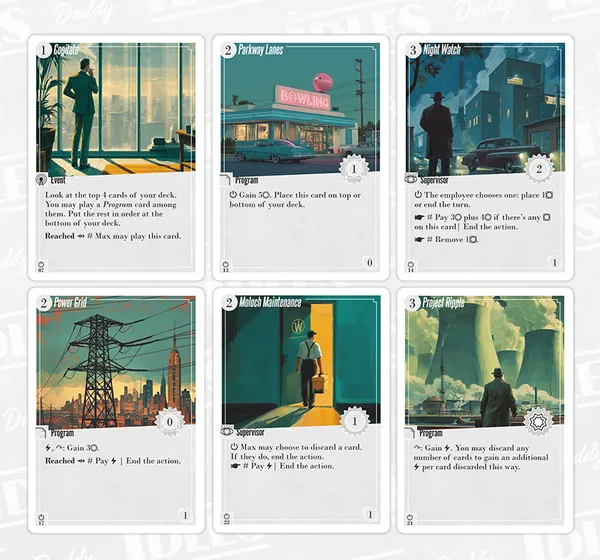
For the employee cards, the tones are more yellowish and warmer; the colors are a bit more intense. There are frozen, impersonal smiles in a way that only GenAI could do—like feigned happiness. The game mechanics also try to reflect this imposed glee and the consumerist spirit of the era. But there are also more real images of the more "feely" type associated with the human condition. It all ties together both loosely enough to leave room for interpretation and tightly enough to make thematic sense when you play the game. The devil is in the details, but I don't want to spoil the fun of discovering them.
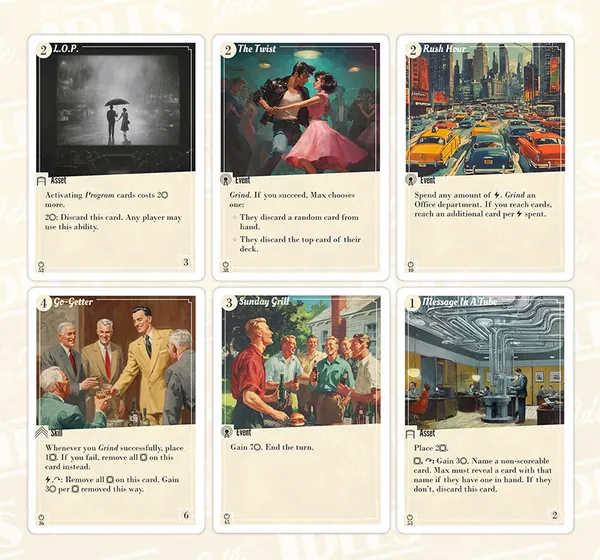
Soda Break
The game had to be based in the 1950s US. It’s far enough back in time that any materials we generate with GenAI could not easily be traced to living artists. More importantly, it’s the transposition of up-to-date problems onto different time periods that does the trick. When did this all start?
The mid-century US represents the golden age of capitalism—an idealized image that left many realities on the fringe: Black communities, women, etc. How are today’s problems a reflection of that time period?
It’s an endless sandbox of themes that are still very relevant. We chose to focus on the construction of suburbia, the industrialization of the food and beverage industry, and the advent of TV. The decisions made decades ago are still profoundly relevant. It’s a proposal that we go down memory lane and come back with not just nostalgia, but social critique.
The idea is that we fill in these blanks together. Through the application "Babll," we will propose a series of images—and we’d love for you to contribute to the lore of these cards. For instance, what does this say to you?
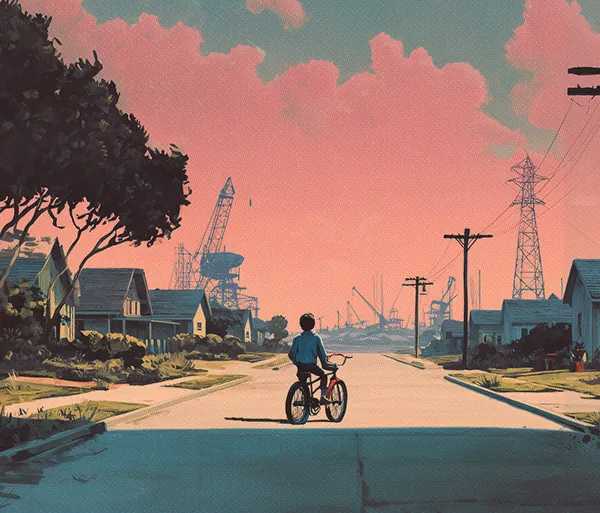
Some will try to say that anything produced by AI is "slop." And I could even agree with that, as long as the goal is solely to create content with an eye on revenue. Then again, I could say the same about any piece of art conceived as a product informed by demographics—which is most of them these days. Regardless of whether the artist was human or not, when you start to "produce," you stop creating.
But if we broaden the definition, maybe you can find in this project an unusual number of layers—political, social, artistic—that at least qualify it as something very different. What I can tell you is that a lot of thought, vision, and love has been poured into it, and perhaps more importantly, human expression—mine. Maybe that makes it "art"?